
You feel energetic, you eat relatively well, and you walk the dog every evening. But when your latest routine bloodwork comes back, a few numbers are highlighted in red. Suddenly, you find yourself wondering: Could this be me? Is my heart at risk without me even realizing it?
It is a common scenario. High cholesterol rarely comes with warning signs, head-to-toe symptoms, or dramatic alarms. For many of us in Steinbach and across Southeast Manitoba, heart health feels like something to worry about “later in life”,until lab results bring it front and center today.
At AlphaDX Clinic, we believe lab results shouldn’t feel like a mysterious foreign language or a strict pass-or-fail test. Understanding your cholesterol is about connecting the dots between those numbers and your real, everyday life, giving you clarity and confidence for the long run.
What Is Cholesterol, Really?
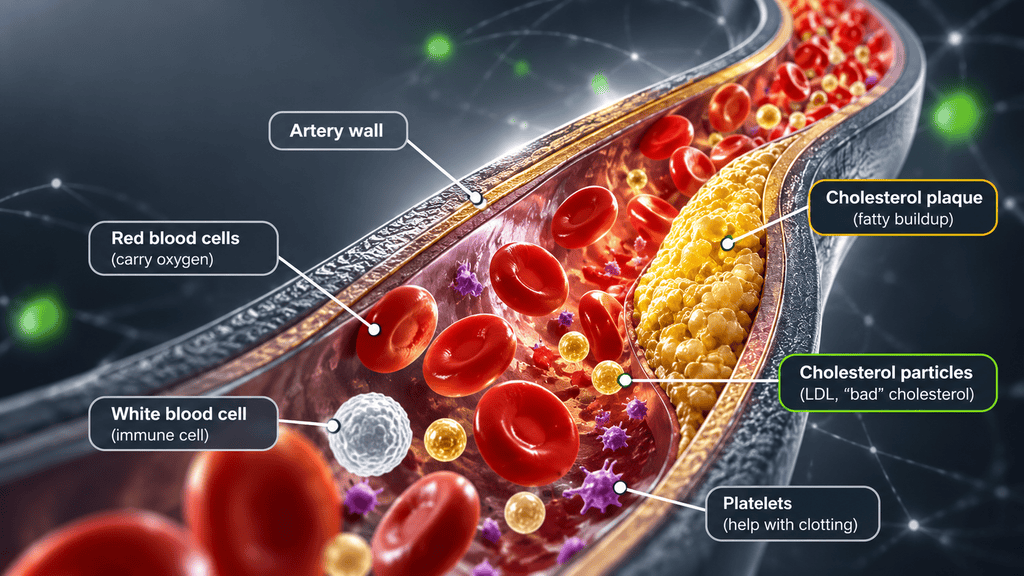
Contrary to popular belief, cholesterol isn’t purely a villain. It is a vital, waxy substance your body uses to build healthy cell membranes, manufacture essential hormones, and process vitamin D. Your liver produces most of the cholesterol you need, and it travels through your bloodstream inside lipid-and-protein packages called lipoproteins.
The issue isn’t having cholesterol; it is what happens when certain types circulate at elevated levels for years. Over time, extra cholesterol can settle into artery walls, creating plaque buildup in a process called atherosclerosis. Think of it like slow plumbing buildup: as arteries narrow, blood flow becomes restricted, increasing the risk of heart attacks and strokes.
According to the Heart and Stroke Foundation of Canada, high blood cholesterol remains one of the single most controllable risk factors for cardiovascular disease. The empowering news? Because it is controllable, you have real power to influence your outcome.
Understanding the Numbers on Your Cholesterol Test
When you open your lab report, you will see a lipid panel broken down into several specific metrics. Here is what those acronyms mean for your daily health:
LDL Cholesterol
What it is: Low-density lipoprotein is famously known as “bad” cholesterol because excess LDL circulates in the blood and deposits fat along your artery walls.
What it means for you: Lower LDL numbers generally mean cleaner blood vessels. Extensive Canadian clinical evidence confirms that keeping LDL in a healthy target range directly reduces your long-term risk of heart events.
HDL Cholesterol
What it is: High-density lipoprotein is the “good” cholesterol. It acts like a clean-up crew, collecting extra cholesterol from your bloodstream and hauling it back to the liver to be broken down.
What it means for you: Higher HDL is protective, but it isn’t an all-access pass. A high HDL score cannot completely neutralize the cardiovascular risks of high blood pressure, smoking, or elevated LDL.
Triglycerides
What it is: Triglycerides are the most common type of fat in your body, formed when you consume extra calories that aren’t immediately needed for energy.
What it means for you: High triglycerides often point to dietary patterns, alcohol consumption, high blood sugar, or metabolic stress. When elevated alongside high LDL, your overall heart risk rises.
Total Cholesterol
What it is: This is the sum total of LDL, HDL, and other lipid components in your blood.
What it means for you: Total cholesterol provides a quick snapshot, but it can be misleading. Two people can share the exact same total score, yet one may have high protective HDL while the other has high arterial-clogging LDL.
Non-HDL Cholesterol
What it is: Calculated by subtracting HDL from total cholesterol, this number reflects all the atherogenic (plaque-forming) particles in your bloodstream.
What it means for you: Top Canadian guidelines highlight Non-HDL (and specialized markers like ApoB) as an exceptionally reliable indicator of heart risk, especially for individuals with elevated triglycerides or metabolic conditions.
Why a “Normal” Cholesterol Number Doesn’t Always Mean Low Risk

A common pitfall in interpreting heart health is assuming that a “normal” lab value automatically means zero risk. In reality, cardiovascular risk is a personal puzzle, not a single static number.
Consider two neighbors living in Mitchell:
- Person A is 35, physically active, non-smoking, with normal blood pressure and no family history of heart disease. An LDL of 3.2 mmol/L might represent very low overall risk for them.
- Person B is 52, manages diabetes, has mild high blood pressure, and lost a parent to early heart failure. That exact same LDL score of 3.2 mmol/L carries a significantly higher risk profile, requiring a far more proactive preventive strategy.
To build an accurate picture of your personal heart health, healthcare professionals evaluate your cholesterol in tandem with key life factors:
- Age and sex
- Blood pressure
- Smoking or vaping
- Diabetes
- Kidney disease
- Family history of premature cardiovascular disease
- Previous heart disease or stroke
- Physical activity and nutrition
- Other lipid measurements and risk modifiers
The Canadian Cardiovascular Society recommends routine risk evaluations using validated Canadian assessment tools for adults aged 40 to 75 to guide smart, preventative decisions before problems arise.
Debunking Common Cholesterol Myths
Myth 1: “I would feel it if I had high cholesterol.”
Fact: High cholesterol is completely silent. You cannot feel plaque building up in your blood vessels until significant blockage occurs.
Myth 2: “I fit and active, so I don’t need to worry.”
Fact: Fitness is fantastic for your heart, but genetics, liver function, and dietary choices heavily dictate cholesterol production regardless of body size or exercise routine.
Myth 3: “Dietary cholesterol in eggs is the main cause of high blood cholesterol.”
Fact: For most people, saturated fat and refined carbohydrates have a far greater impact on liver cholesterol synthesis than the actual cholesterol found in whole foods.
Advanced Testing: What About ApoB and Lp(a)?
For standard care, a basic lipid panel works well. However, deeper clinical assessments sometimes look at additional advanced markers:
Apolipoprotein B (ApoB): Measures the exact quantity of atherogenic particles in circulation, offering precision when traditional LDL counts are unclear.
Lipoprotein(a) or Lp(a): An independent, genetic risk factor. Canadian Cardiovascular Society Guidelines recommend testing Lp(a) at least once in a lifetime during routine screening to uncover hidden inherited risk.
Actionable Steps: Small Lifestyle Changes Count
Improving your heart health doesn’t require flipping your entire lifestyle upside down overnight. Sustainable, realistic shifts make a lasting difference:
Swap Fats, Don’t Eliminate Them
Replace butter or heavy vegetable oils with olive oil, avocado, or nut butters. Small daily swaps help lower LDL naturally over time.
Add 5 Grams of Soluble Fiber Daily
Soluble fiber acts like a sponge in your digestive tract, trapping cholesterol before it enters your blood. Start your morning with a bowl of oatmeal, top salads with chia seeds, or add lentils to your night’s dinner soup.
Build Movement into Your Routine
You don’t need intense marathon training. Aiming for 150 minutes per week of brisk walking, cycling, or active gardening boosts protective HDL and supports healthy blood pressure.
Rethink Evening Drinks
Cutting back on alcohol consumption directly helps reduce elevated triglyceride levels and improves overall metabolic function.
Do High Numbers Always Mean Medication?
Not automatically. Medication decisions are based on overall risk, not just a single lab value.
For individuals at lower risk, proactive lifestyle adjustments and regular monitoring may be all that’s required. For others with higher risk profiles or pre-existing conditions, preventative medications like statins provide proven protection. Research reviewed by the Canadian Cardiovascular Society demonstrates a 20–22% relative reduction in major cardiovascular events for every 1 mmol/L reduction in LDL-C.
When Should You Talk to a Professional?
You should consider scheduling a primary care assessment or lipid panel review if:
- You are over age 40 and haven’t had a cholesterol check in the last 3–5 years.
- You have a family history of early heart disease or stroke (before age 55 in men or age 65 in women).
- You manage hypertension, diabetes, or chronic kidney disease.
- Your recent lab results contain flagged values that you want translated into a clear, personalized plan.
Your Health, Your Community: Care in Southeast Manitoba
Whether you live in Steinbach, Mitchell, Blumenort, La Broquerie, Niverville, or Kleefeld, staying proactive about your health is one of the best investments you can make for yourself and your family. At AlphaDX Clinic, our team offers approachable diagnostic and preventive healthcare services designed to give you clarity without the stress.
Take the Next Step for Your Heart
Knowing your numbers is the first step; understanding what to do with them is where real prevention begins. You don’t have to navigate your cardiovascular health alone.
Ready for personalized health insights? Contact AlphaDX Clinic today to schedule your comprehensive cardiovascular assessment and start building your custom health roadmap.
References
- Pearson GJ, et al. (2021). Canadian Cardiovascular Society Guidelines for the Management of Dyslipidemia. Canadian Journal of Cardiology. Canadian Cardiovascular Society
- Heart and Stroke Foundation of Canada. Managing Cholesterol. Heart & Stroke
- Canadian Cardiovascular Society. Management of Dyslipidemia in Primary Prevention. CCS Guidelines
- Canadian Cardiovascular Society. Evidence Review and Recommendations: Non-HDL-C, ApoB and Cardiovascular Risk. CCS Evidence Review
This article provides general educational information and does not replace individualized medical advice, diagnosis, or treatment.